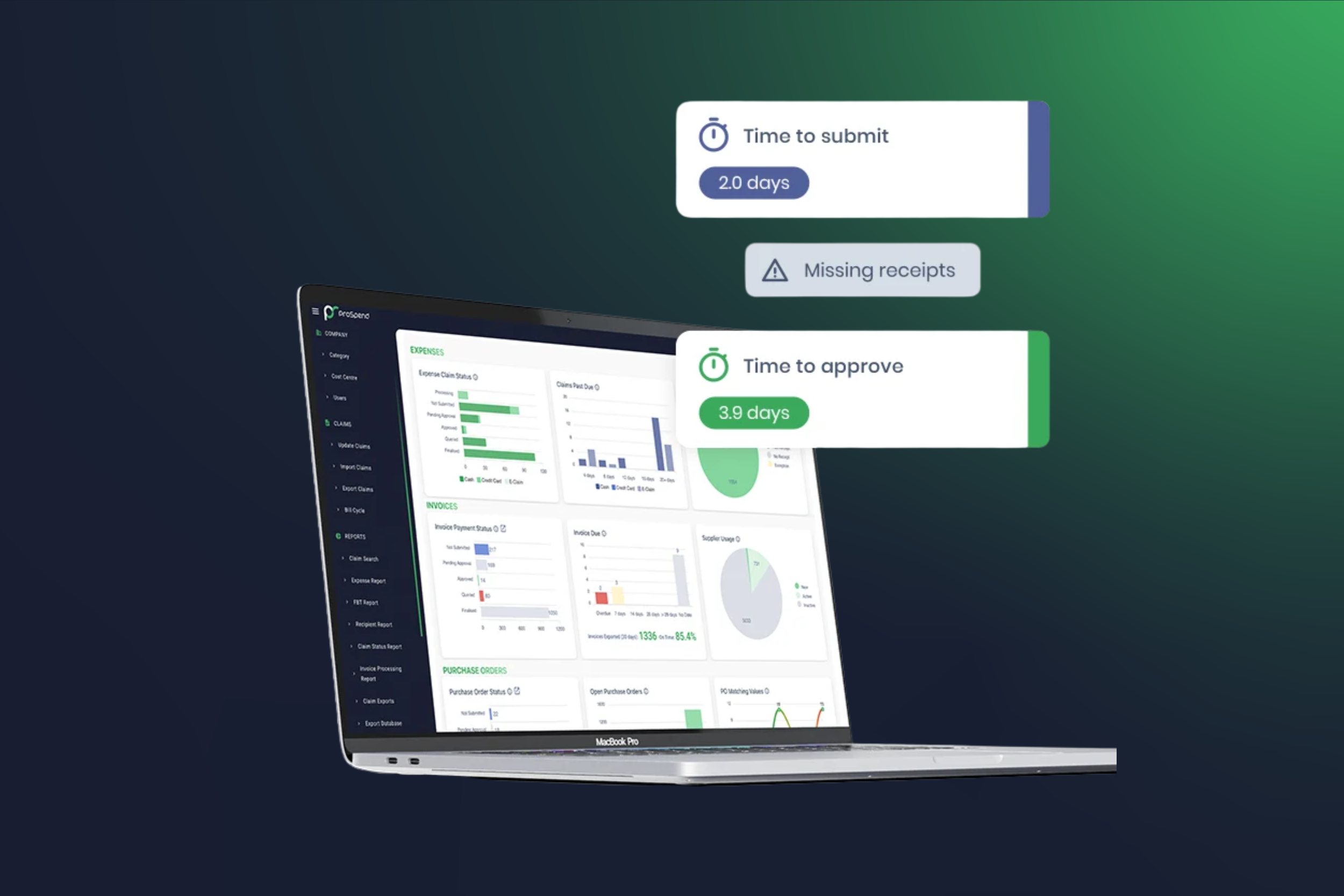
TL;DR: In this session, Marianne Wichman (Channel Partner Manager) and Sean Kennedy (Outbound Account Executive) walked through how finance teams take the manual work out of employee spend by capturing expenses as they happen, auto-coding them to the right account, and getting real-time visibility long before month-end. Missed it, or want to revisit? The full recording is below.
Manual expense admin has a way of filling a finance team's week: chasing receipts, reconciling card statements line by line, and processing reimbursement claims that land months after the accounts are closed. In this session, Maz Wichman and Sean Kennedy showed a different way to run it, and Sean took the platform through a live demo so attendees could see it in action.
Here's a quick recap for everyone who registered.
What we covered
No more chasing receipts
Instead of finance chasing paperwork weeks after a trip, employees capture spend at the point of purchase from their phone. The receipt is attached to the transaction the moment it happens, so nothing goes missing, and there's nothing to reconstruct at month-end.
Spend that codes itself
Every transaction is auto-coded to the right account, cost centre, department and entity based on rules you set once. That takes the guesswork — and the manual data entry — out of getting spend into the books correctly.
Within policy, before the money goes out
Approval workflows check spend against your policy before it's approved, not after it's already been spent. Sean showed how that keeps control in place without adding a bottleneck to everyday purchases.
Virtual cards and reimbursements
Issuing cards to staff — or to volunteers, if you're an NFP — no longer means paperwork and lost visibility. Virtual cards can be issued instantly and tracked in one place, and reimbursements are processed against the same automated workflows.
Straight into your ERP
Approved spend flows into your ERP system with no manual re-entry, so the data your team works from is accurate and current rather than pieced together after the fact.
Real-time visibility
The thread running through all of it: you see spend as it happens, not weeks later when the statements arrive. That means fewer surprises at month-end and better data to make decisions from.
Want to see how this would work for your business?